At first glance, fusilli and rotini look almost identical. Both are short, curly pastas that seem perfect for holding onto sauce. However, despite their similar appearance, there are key differences between these two Italian staples that can affect your dish.
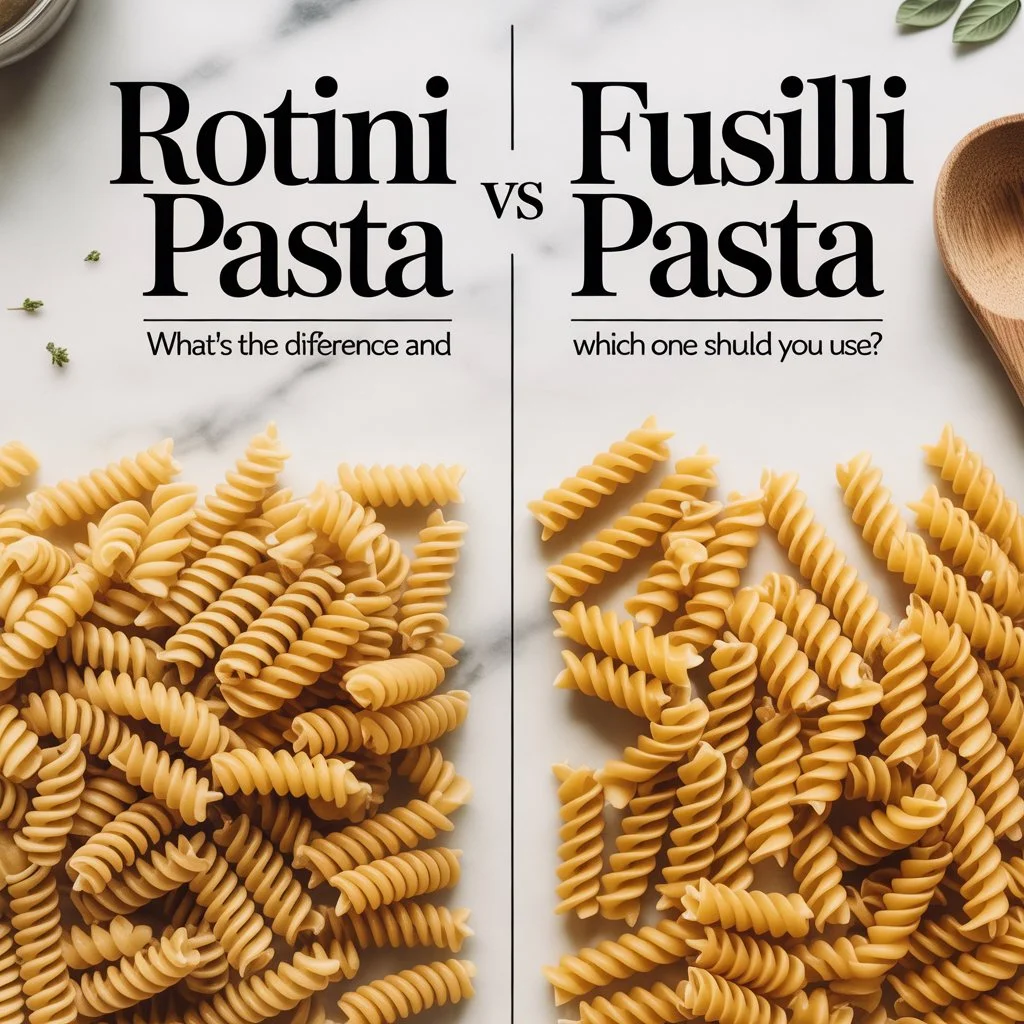
If you have ever stood in the pasta aisle wondering which one to buy, this guide will explain everything you need to know.
The Quick Answer
The main difference lies in how they are made and their resulting shape.
-
Fusilli is made by twisting strands of pasta into a spring-like shape. It has a looser, longer spiral.
-
Rotini is extruded through a mold into a tight corkscrew shape. It has tighter, more compact spirals.
While they can often be used interchangeably, understanding these nuances helps you choose the right pasta for your specific recipe.
Origin and History
Both pastas hail from Italy, but their histories differ slightly.
-
Fusilli: Originating in Southern Italy, its name comes from "fuso" meaning "spindle" — a reference to the traditional method of spinning fresh pasta around a thin rod to create its signature curl.
-
Rotini: While also Italian in origin, rotini became highly popularized in Italian-American cuisine. Its name is derived from "rotino" meaning "small wheels".
Shape, Texture, and Structure
This is where the two pastas truly diverge.
| Feature | Fusilli | Rotini |
|---|---|---|
| Shape | Spring-like, longer, looser spirals | Tight, compact, corkscrew twists |
| Surface | Smoother texture | Ridges or grooves on the surface |
| Mouthfeel | Chewier, denser bite | Lighter, more delicate bite |
Because fusilli is twisted from flat strips, it has a smoother texture. Rotini, being extruded through a die, often features ridges that help grab sauce.
Which Sauce Pairs Best?
The shape of your pasta determines how well it holds different types of sauces.
Best Uses for Fusilli
Fusilli’s slightly looser coils and chewy texture make it ideal for hearty, thick sauces. The gaps in the spiral trap chunky ingredients like meat, vegetables, and cheese.
-
Best for: Meat ragu, thick cream sauces (like Alfredo), pesto, and baked casseroles.
-
Also great for: Thick, hearty soups where the pasta needs to hold its shape.
Best Uses for Rotini
Rotini’s tight, ridged spirals are excellent at capturing lighter sauces and small ingredients. The compact structure helps it hold onto dressing without getting soggy.
-
Best for: Pasta salads, oil-based sauces, and lighter tomato sauces.
-
Also great for: Cheesy bakes where you want sauce trapped in every bite.
Cooking Tips
Cooking these pastas is straightforward, but a few tips ensure perfect results.
-
Cooking Time: While times vary by brand, rotini generally cooks slightly faster (7-10 minutes) than fusilli (9-12 minutes) due to its tighter structure. Always check the package instructions.
-
Don't Overcook: Both are best served al dente (firm to the bite). Overcooking makes them mushy and loses their sauce-holding ability.
-
Rinsing: If you are making a cold pasta salad, rinse the pasta with cold water after draining to stop the cooking process and remove excess starch.
Nutritional Comparison
Nutritionally, there is virtually no difference between the two. Both are made from the same basic ingredients: durum wheat semolina and water.
A standard serving (about 2 ounces dry) of either pasta contains approximately:
-
Calories: ~200
-
Carbs: ~40g
-
Protein: ~7g
Choosing a whole wheat version of either shape will increase fiber and protein content.
Can You Substitute One for the Other?
Yes, generally you can.
In most home recipes, fusilli and rotini are interchangeable. The differences in texture are subtle enough that they won't ruin a dish. However, for best results:
-
Use fusilli if you want a chewier bite with thick, chunky sauces.
-
Use rotini for cold salads or lighter, oil-based dressings.
The Verdict
Choosing between fusilli and rotini comes down to personal preference and the dish you are making.
-
Choose Fusilli for a hearty, traditional Italian meal with a thick meat or cream sauce.
-
Choose Rotini for a quick pasta salad or a light, fresh primavera.
If you only have one in your pantry, don't worry—it will still be delicious. But now you know the subtle art of choosing the perfect twisted pasta for your next dinner.
Comments on “Fusilli vs Rotini: What's the Difference Between These Twisted Pastas?”